

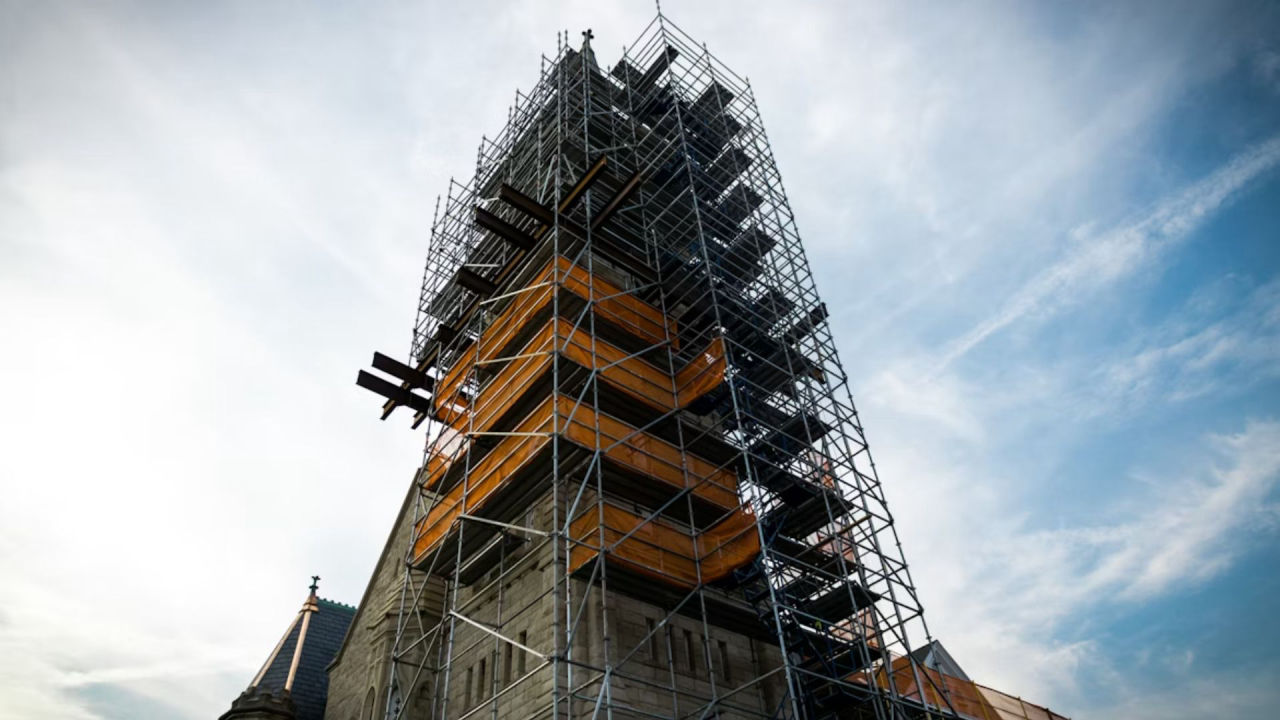
The concepts of remodeling, rehabilitating, and restoring are particularly relevant in the field of architecture and built heritage management, especially in a European and national context that prioritizes sustainability, conservation, and cultural enhancement. The distinction between them is not merely semantic; it corresponds to specific doctrinal and legal frameworks that guide professional practice and intervention in the territory.
International benchmarks for heritage conservation
At the international level, the Athens Charter (1931) established one of the first milestones in conservation theory, advocating respect for the authenticity of monuments and the need for interventions based on scientific criteria.
Subsequently, documents such as the Krakow Charter (2000) reinforced the importance of safeguarding historical and material values, emphasizing that any intervention must be recognizable and compatible with the existing structure, avoiding historical falsifications.
The recommendations of the International Council on Monuments and Sites consolidate this approach, promoting integrated conservation and minimal intervention as guiding principles.
Legal framework in Portugal
Protection of cultural heritage
In Portugal, these guidelines are enshrined in Law No. 107/2001, which establishes the basis for the policy and regime for the protection and enhancement of cultural heritage. This law stipulates that classified assets—or those in the process of being classified—must be subject to interventions that safeguard their authenticity and integrity, requiring the preparation of preliminary studies, projects, and appropriate technical reports. The legal regime applicable to works or interventions on cultural assets also requires that these be carried out by qualified technicians and subject to administrative control, reflecting the concern with passing on heritage to future generations.
Renovation: framework and objectives
When it comes to transforming existing buildings, it is important to consider the Legal Framework for Urbanization and Construction (RJUE), which structures urban operations in Portugal.
This legislation distinguishes between different types of works—namely conservation, alteration, reconstruction, and extension works—allowing the current concept of remodeling to be classified as alteration works. These correspond to interventions that modify the configuration, compartmentalization, or construction elements of the building without necessarily involving its total demolition. Thus, remodeling tends to refer to an action aimed at functional, technical, or aesthetic updating, often less constrained by heritage concerns, although always subject to urban planning rules and municipal licensing where applicable.
Rehabilitation: urban regeneration and performance improvement
In the field of urban regeneration, the Legal Regime for Urban Rehabilitation (RJRU) stands out. Approved by Decree-Law No. 307/2009, it establishes a strategic framework for the revitalization of cities and historic centers.
The RJRU defines urban rehabilitation as an integrated intervention on the existing fabric, aimed at improving conditions of use, safety, health, and energy efficiency, while promoting social cohesion and urban competitiveness.
This scheme introduces instruments such as Urban Rehabilitation Areas (ARU) and Urban Rehabilitation Operations (ORU), which allow for the coordination of tax incentives, financing mechanisms, and simplified administrative procedures, promoting a systematic approach to building restoration.
In addition, specific schemes applicable to the rehabilitation of buildings and housing units reinforce the need to improve the state of conservation of the properties involved, highlighting that rehabilitation is not limited to repairing defects, but aims to effectively improve the overall performance of the building.
This perspective is close to the European concept of “integrated conservation,” which became widespread after the 1975 Amsterdam Declaration and advocates adapting heritage to contemporary requirements without losing its identity values.
Renovation as part of building management
According to reflections promoted by the Order of Architects, renovation should be understood as part of a broader cycle of building management, which includes prevention, maintenance, conservation, and restoration.
Good practices point to interventions based on rigorous technical diagnosis and knowledge of the original construction techniques, favoring compatible and reversible solutions whenever possible. This approach extends the useful life of buildings and reduces the need for more intrusive actions.
Restoration: scientific rigor and protection of authenticity
Restoration is a particularly demanding and specialized task. In line with international doctrine, it aims to conserve and reveal the historical and artistic values of a property, based on respect for the original material and the use of appropriate techniques.
The Krakow Charter emphasizes that restoration must cease where speculation begins, rejecting speculative reconstructions. In Portugal, this requirement is reinforced by the regime applicable to classified cultural assets, which imposes methodological rigor, scientific justification, and institutional supervision.
Hierarchy of intervention and sustainability
The technical publications of the Order of Architects emphasize a true hierarchy of intervention:
1. Prevention, through management policies and appropriate use;
2. Maintenance, ensuring durability;
3. Conservation, which stabilizes what already exists;
4. Restoration or deep rehabilitation, only when absolutely necessary.
This paradigm reflects a cultural shift—from a reactive to a preventive approach—consistent with the principles of sustainability and environmental responsibility.
Comparative summary of concepts
Remodeling, rehabilitation, and restoration represent different degrees and intentions of intervention on buildings, now clearly framed by the main Portuguese legal regimes.
Remodeling, which falls under the operations provided for in the RJUE, favors immediate adaptation to user needs.
Rehabilitation, structured by the RJRU, seeks to balance continuity and transformation from an integrated urban perspective.
Restoration assumes the responsibility of protecting heritage authenticity, in line with the Basic Law on Cultural Heritage and international doctrinal charters.
Together, these instruments reveal a central idea: intervening in the built environment implies an ethical commitment to collective memory, architectural quality, and intergenerational responsibility.