

Summary: Learn how technical reviews and evaluations of projects ensure the feasibility of construction and compliance with regulations. We act as independent evaluators to ensure the robustness of third-party solutions and as designers focused on continuous improvement through external audits, mitigating errors, omissions, and budget overruns.
In today’s landscape of construction and urban planning, the quality of a construction design is determined by its ability to anticipate challenges and eliminate inaccuracies before work begins on-site. Design review is thus a critical technical audit process that ensures regulatory compliance, economic feasibility, and structural integrity for any building. At PMT, this discipline is approached with absolute rigor, serving both to independently validate third-party solutions and to continuously optimize our own architectural and specialty projects.
The Role of the Independent Evaluator and Compliance in Public Bidding
The role of the independent evaluator is often a mandatory requirement in public tenders and high-profile construction projects, where transparency and risk mitigation are priorities for the Project Owner. As an evaluation entity, our mission is to subject the project to exhaustive scrutiny, verifying strict compliance with the specifications and applicable legislation. This independent technical opinion serves as a seal of approval for public entities and private developers, ensuring that the project submitted for tender is free from errors and omissions that could compromise the planned deadlines and budgets.
On the other hand, the dynamics of project review are also evident internally in our design practice. Whenever a project developed by our team undergoes an external evaluation, we view the technical feedback as an opportunity for improvement. This collaborative review process allows us to refine construction details, optimize engineering solutions, and ensure that the final product delivered to the client not only fulfills the architectural vision but also exceeds the feasibility standards demanded by the most rigorous reviewers.
Coordination and Verification: The Process of Building on Paper
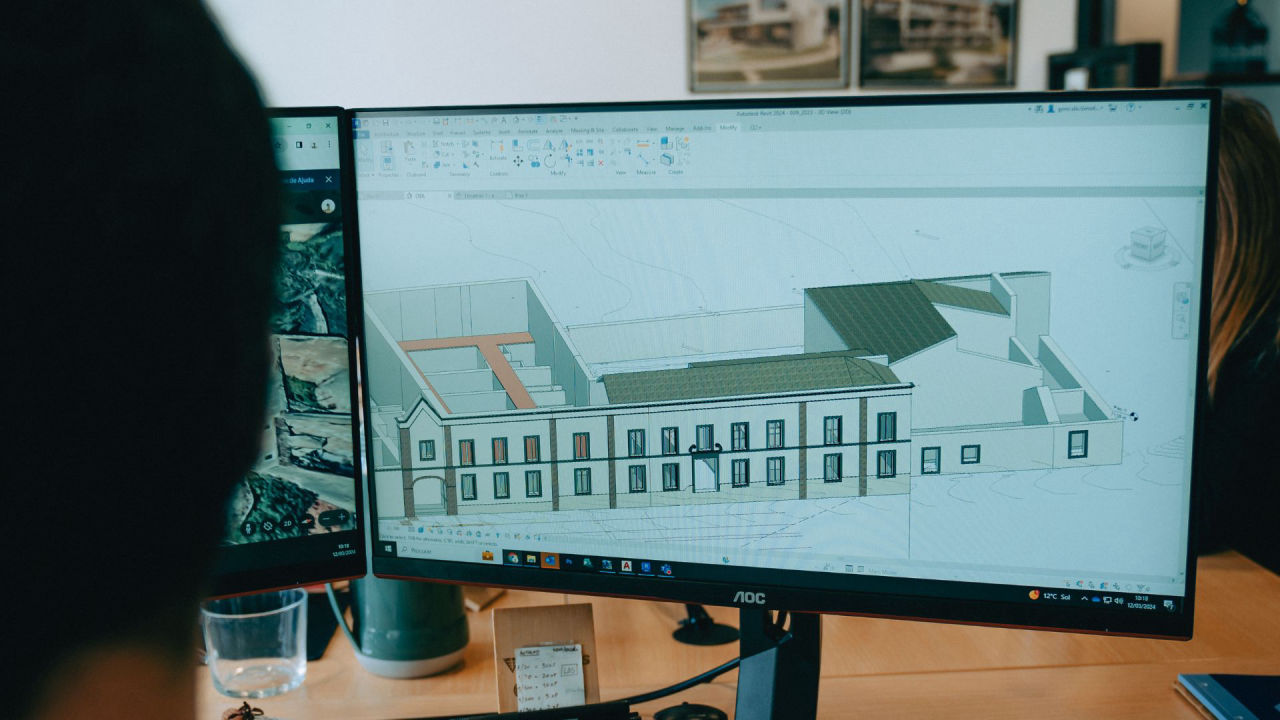
The technical review of a project is not limited to a formal verification; it is an exercise in “virtual construction” in which architecture and engineering disciplines intersect to detect conflicts. It is at this stage that conflicts between the structure and infrastructure—such as plumbing or HVAC systems—are resolved, conflicts that often go unnoticed in earlier phases. Through this in-depth analysis, we are able to implement Value Engineering strategies aimed at optimizing the total cost of the project without compromising the quality of materials or the safety of the proposed solutions.
The importance of this service also extends to compliance with the latest technical standards, such as the Legal Framework for Urbanization and Construction or new energy efficiency requirements. A project that does not undergo a thorough review runs the risk of facing administrative stoppages or costly corrections during execution. By integrating project review into the workflow, we are protecting the investment and ensuring that municipal permitting and subsequent construction proceed smoothly and efficiently.
Conclusion: An Investment in Project Security
In short, design review—whether required by law for public works or undertaken as a matter of strategic prudence in the private sector—is the most effective tool for avoiding rework and unexpected construction delays. For PMT, our dual role as evaluators and reviewers gives us a deep understanding of the requirements of all parties involved in the construction process. Our commitment is to translate technical complexity into clear and safe solutions, establishing technical authority in every project we sign or validate.